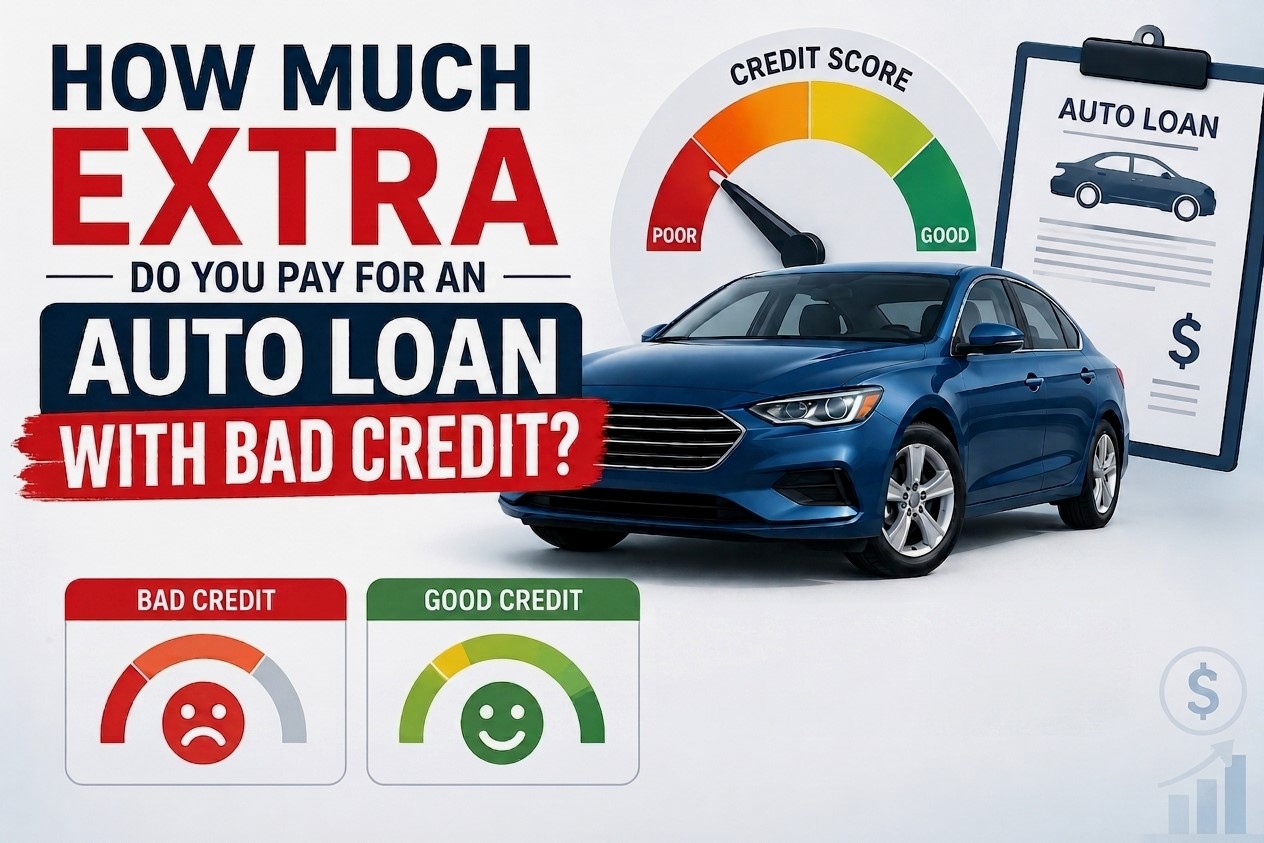
So you need a car, but your credit score is sitting somewhere in the "needs work" zone. Maybe you missed a few payments during a rough patch, or you're still building credit from scratch. Either way, you're probably wondering the same thing almost everyone in your situation asks: how much more am I actually going to pay for this car loan because of my credit?
I've worked with a fair number of car buyers over the years, watching them navigate this exact question, and I'll be honest with you the difference between a good-credit auto loan and a bad-credit auto loan usually isn't small. It can add up to thousands of dollars over the life of the loan. But here's the good news: once you understand where that extra cost tends to come from, you can take real steps to shrink it, sometimes significantly.
In this guide, we'll walk through typical dollar amounts, explain how bad credit auto loan rates generally work, and share practical tips based on patterns I've seen play out again and again. No fluff, no jargon — just a clear breakdown and a game plan.
Quick note before we dive in: this article is meant for general education, not as financial or lending advice. Keep reading below for more on that.
A Quick Disclaimer Before We Go Further
Before you go any further, here's something important to keep in mind: everything in this article is meant for general educational purposes only. It is not financial, legal, or lending advice, and it shouldn't be treated as a substitute for guidance from a licensed financial advisor, credit counselor, or loan officer.
Interest rates, loan terms, and lending requirements change often, and they vary a lot depending on the lender, your location, your specific credit profile, the vehicle you're financing, and broader market conditions at the time you apply. The numbers and examples below are illustrative estimates based on general, publicly available market patterns they are not quotes, promises, or guarantees of what you'll actually be offered. Always check current rates directly with lenders and do your own research before making any financial decision.
With that out of the way, let's get into it.
What "Bad Credit" Actually Means to a Lender
Before we talk dollars, let's clear up what lenders typically mean when they say "bad credit." It's not just a vague feeling it's generally tied to a number, and that number plays a big role in shaping your loan offer.
Most auto lenders use some version of the FICO Auto Score, which is a little different from the regular FICO score you might see on a free credit app. Generally speaking, lenders tend to group borrowers into rough tiers like these:
- Super prime: roughly 781 and above
- Prime: roughly 661–780
- Nonprime: roughly 601–660
- Subprime: roughly 501–600
- Deep subprime: roughly 300–500
These ranges can shift slightly depending on the scoring model and the lender, so think of them as general guidelines rather than fixed rules. If you're landing in the subprime or deep subprime range, lenders will typically view you as a higher-risk borrower, and that perceived risk tends to get priced into your interest rate. It's not personal it's largely statistical. Lenders are essentially estimating the odds that a loan will be repaid as agreed, and a lower score generally signals more uncertainty around that.
The Real Cost Difference: Bad Credit vs. Good Credit Auto Loans
Let's get to the kind of numbers you probably clicked on this article to see. Keep in mind these are approximate, illustrative figures based on general recent market patterns not guaranteed rates you'll be offered. Here's a rough, simplified breakdown of how new car loan rates have tended to look across credit tiers:
- Super prime (781+): roughly in the mid-single digits (for example, around 5.5%–6.5%)
- Prime (661–780): roughly one to two points higher (for example, around 7%–8%)
- Nonprime (601–660): noticeably higher still (for example, around 10%–11%)
- Subprime (501–600): a significant jump (for example, around 14%–16%)
- Deep subprime (300–500): often the highest tier (for example, around 18%–21% or more)
For used cars, rates tend to run higher across every tier, sometimes by an additional 3 to 5 percentage points, though this varies a lot by lender and market conditions.
A quick reminder: actual rates vary by lender, your exact credit profile, your state, the loan term you choose, whether the vehicle is new or used, and the overall interest rate environment at the time you apply. Treat the numbers below as a way to understand the general pattern, not as a quote for your specific situation.
Now let's put this into example dollar figures, because percentages alone don't always tell the full story.
Example: $25,000 Car Loan Over 60 Months
Let's say, purely as an illustration, that you're financing a $25,000 vehicle with a 60-month loan term and no down payment (not necessarily ideal, but it keeps the comparison simple).
- Super prime example at 6%: monthly payment around $483, total interest around $3,980
- Prime example at 8%: monthly payment around $507, total interest around $5,405
- Nonprime example at 11%: monthly payment around $544, total interest around $7,635
- Subprime example at 16%: monthly payment around $608, total interest around $11,480
- Deep subprime example at 20%: monthly payment around $662, total interest around $14,720
These are sample calculations, not universal outcomes your actual numbers could be higher or lower depending on your lender and loan details. Still, the pattern is worth noticing: the gap between the super prime example and the deep subprime example works out to roughly $11,000 more in interest for essentially the same car. That's the kind of extra weight bad credit can put on a loan over time.
I remember helping someone close to me run through numbers like these a while back. She was surprised to see that her estimated "bad credit car loan" cost was going to land somewhere close to the price of a second car, just in interest. That's often the moment people start paying closer attention to their credit profile.
Why the Gap Tends to Be So Big
You might be wondering: okay, risk equals higher rates, sure, but why is the jump often so dramatic? A few common reasons:
- Lenders price in default risk. Subprime borrowers statistically default more often as a group, so lenders often charge more across the board to help offset losses from the portion of borrowers who don't repay.
- Loan terms tend to stretch longer for some bad-credit buyers. Longer terms mean more months of interest accruing, which can meaningfully increase the total cost.
- Add-on products get pushed more often. Extended warranties, gap insurance, and similar add-ons are sometimes bundled into bad-credit loans, which can quietly increase the total amount financed.
- Dealer markup can play a role. Some dealerships work with subprime lenders and may add a markup on top of the rate the lender initially offers, particularly if a buyer doesn't compare offers beforehand.
That last point is worth pausing on. In my experience, dealer financing markup is one of the more overlooked costs in this whole picture. A lender might approve someone at, say, 15%, and in some cases the dealer marks that up to 17% or 18%, keeping the difference. This practice is legal in most places, but it isn't always clearly disclosed unless you ask directly so it's always worth asking.
Hidden Costs That Can Make Bad Credit Loans Even Pricier
The interest rate is the headline number, but it's rarely the only extra cost tied to a lower credit score. Here are a few other things that often come up:
Higher Down Payment Requirements
Many subprime lenders ask for 10% to 20% down before approving a loan, though this varies. That's cash you'd need upfront, on top of everything else.
Mandatory or Recommended GAP Insurance
Because bad credit loans often carry higher balances relative to the car's value, some lenders require or strongly recommend gap insurance, which covers the difference between what you owe and what the car is worth if it's totaled. This isn't inherently a bad thing, but it is an extra cost worth budgeting for and understanding fully before you agree to it.
Prepayment Penalties
Not every lender includes these, but some subprime auto loans carry penalties for paying the loan off early. Always read your loan agreement carefully, or ask a professional to review it, before signing.
Origination or Processing Fees
Some lenders add fees for processing higher-risk applications. These can range widely, so it's worth asking your lender directly what fees apply to your specific offer.
How to Potentially Lower Your Bad Credit Auto Loan Rate
Now for the more encouraging part. While no strategy can guarantee a specific rate or outcome, there are several approaches that commonly help borrowers reduce their costs. As always, your results will depend on your individual circumstances, so consider these general starting points rather than guaranteed fixes.
1. Shop Multiple Lenders Before You Set Foot in a Dealership
This tends to be one of the more effective ways to potentially reduce your costs. Getting pre-approved by a few different lenders a credit union, an online lender, maybe a bank you already have a relationship with before you go car shopping can put you in a stronger negotiating position. Walking into a dealership with a pre-approval in hand generally gives you more leverage than accepting whatever financing is offered on the spot.
Credit unions, in particular, sometimes offer more competitive rates for lower credit tiers compared to larger banks or dealership financing arms, though this isn't universal. It's always worth comparing.
2. Consider a Bigger Down Payment
Generally speaking, every extra dollar you put down is a dollar you won't be paying interest on. A larger down payment can also lower your loan-to-value ratio, which in some cases may help you qualify for a slightly better rate tier.
3. Consider a Shorter Loan Term If Your Budget Allows
It can be tempting to stretch a loan out to 72 or 84 months to lower the monthly payment, but longer terms generally mean paying more in total interest over time. If your budget can handle a shorter term, it may be worth exploring.
4. Explore Whether a Co-Signer Makes Sense
If someone you trust has stronger credit and is willing to co-sign, this can sometimes help lower the offered rate. It's important to be transparent with that person about the shared risk involved missed payments can affect both of your credit profiles. This option really only makes sense when there's genuine trust and open communication on both sides.
5. Look Into Improving Your Credit Profile Before You Apply
You don't necessarily need a dramatic turnaround for it to matter. Even a modest score increase can sometimes shift you into a better rate bracket. A few general, commonly recommended steps include:
- Paying down credit card balances to lower utilization
- Reviewing your credit report for errors and disputing anything inaccurate
- Avoiding new credit applications right before applying for an auto loan
- Making sure current bills are paid on time consistently
Even a short window of focused effort may make a difference, though results vary from person to person.
6. Consider a Used Car Instead of New
New cars typically come with higher price tags, which usually means larger loan amounts and more total interest, especially at higher rates. A reliable used vehicle can reduce the amount you need to borrow, which may help offset a higher interest rate.
Case Study: Two Buyers, Same Car, Different Outcomes
Here's a simplified, illustrative example based on a pattern that tends to show up often. Names and specific numbers are for illustration purposes only.
Buyer A had a credit score around 560 and financed through a dealership's in-house option without comparing other offers first. In this example, she accepted a rate around 19.9% on a $22,000 used SUV over 72 months. Her estimated total interest came out to roughly $16,400.
Buyer B, in this same illustrative comparison, had a similar starting credit score but spent some time getting pre-approved through a local credit union before shopping. She found an offer around 14.5%, added an extra $1,500 to her down payment, and chose a 60-month term instead of 72. Her estimated total interest came out to around $8,700.
Same starting credit profile, but a notably different total cost in this example roughly $7,700 less. The difference in this illustration wasn't about her credit score improving; it came from how she approached shopping for the loan. Individual results will vary based on your lender, market conditions, and personal financial situation.
Should You Wait to Improve Your Credit First?
This is a common question, and the honest answer is: it really depends on your situation, and this is a good one to think through carefully or discuss with a financial professional. If your need for a car is urgent say, your current vehicle just broke down and you need reliable transportation for work waiting isn't always realistic. In that case, it may make more sense to focus on minimizing costs using the strategies above rather than delaying the purchase.
If you do have some flexibility, though, spending a few months on focused credit improvement may lead to a better rate offer down the line. It's worth weighing the potential savings against how urgently you need the vehicle, and talking to a credit counselor if you're unsure which path makes more sense for you.
Final Thoughts and Key Takeaways
Bad credit auto loans generally do cost more sometimes considerably more over the life of the loan but the size of that extra cost is often more within your influence than people initially assume. The rate you're first quoted is rarely the only one available to you.
A few things worth remembering:
- The gap between good and bad credit auto loan rates can, in many cases, translate to several thousand dollars in extra interest on a typical loan
- Comparing offers from multiple lenders before visiting a dealership is generally one of the more effective ways to manage costs
- Down payments, loan terms, and co-signers can all play a role in your total cost, depending on your situation
- Even modest credit improvements before applying may help shift you toward a better rate tier
- Dealer markup is a real possibility, so it's reasonable to ask about the lender's original rate before markup
If you're heading into the car-buying process with less-than-perfect credit, take a breath. You're generally not stuck with whatever number the first lender offers. Compare your options, ask questions, and consider speaking with a trusted financial advisor or credit counselor if you want personalized guidance. A little extra time spent shopping around could make a meaningful difference in your total cost though, as always, actual results will depend on your individual circumstances and the lenders you work with.
Frequently Asked Questions
How much more interest might I pay with a lower credit score compared to a higher one?
It varies quite a bit depending on the lender and loan details, but as a general illustration, a score in the subprime range compared to a prime-range score might mean paying several thousand dollars more in total interest on a typical loan. This is only a general pattern, not a guarantee check with lenders directly for numbers that apply to your situation.
Can I refinance a bad credit auto loan later once my score improves?
In many cases, yes. Once a borrower's credit improves often after a period of consistent on-time payments refinancing to a lower rate may become an option. Whether this makes sense depends on your lender, remaining loan balance, and current market rates, so it's worth exploring with your lender when the time comes.
Do credit unions really offer better rates for bad credit auto loans?
Often, though not always. Credit unions frequently have more flexible underwriting and member-focused pricing, which can sometimes result in lower rates than traditional banks or dealership financing for a similar credit profile. It's still worth comparing multiple options rather than assuming one type of lender is automatically best.
Is it better to buy a used car if I have bad credit?
For many buyers, a lower purchase price can mean a smaller loan amount, which may reduce total interest paid even if the rate itself is higher. Whether it's the right choice depends on your specific needs and budget.
Will getting pre-approved hurt my credit score?
Typically, a single pre-approval inquiry has a small, temporary impact. If you compare offers from multiple lenders within a short, focused window (commonly cited as 14 to 45 days, though this can vary by scoring model), those inquiries are often treated as a single event for rate-shopping purposes. Check with the specific credit scoring model or a credit expert for details relevant to your situation.
What credit score do I generally need to avoid subprime auto loan rates?
As a general guideline, scores in the prime range and above (roughly 661+) tend to see noticeably lower rates than subprime pricing, though this can vary by lender and other factors.
Should I put more money down if I have bad credit?
In many situations, yes — a larger down payment can lower your loan amount, potentially reduce total interest, and in some cases improve the rate offered. That said, it's worth balancing this against your overall savings and financial goals, and speaking with a financial advisor if you're unsure.
This article is intended for general informational and educational purposes only and does not constitute financial, legal, or lending advice. Rates, terms, and lending criteria vary by lender and change over time. Always verify current information directly with lenders and consult a licensed financial professional before making borrowing decisions.